Technical SEO Services: The Foundation Your Rankings Are Actually Sitting On
Technical SEO services exist specifically to fix that layer, the one nobody sees, the one that decides whether everything else you’re doing even has a chance to work.
What Technical SEO Actually Covers
Let’s be specific, because “technical SEO” gets thrown around as a catch-all and that vagueness is part of why people underinvest in it. It’s crawlability — can Google’s bots actually reach your pages. It’s rendering — once they reach a page, can they actually see what’s on it, especially if you’re running something Javax Script-heavy. Its indexation — are the right pages getting into Google’s index, and are the wrong ones (thin pages, duplicates, filtered URL combinations) staying out. It’s site speed and Core Web Vitals. It’s schema markup. It’s internal linking and site architecture. All of it sits underneath everything else — your content, your backlinks, your on-page work — and if any piece of it is broken, the stuff sitting on top underperforms no matter how good it is.
I’ve watched a genuinely excellent piece of content sit buried because of a canonical tag pointing to the wrong URL. Nobody would have guessed that from reading the page. You’d have to go looking.
Our Approach: Forensic, Not Surface-Level
A lot of what passes for a “technical SEO audit” out there is an auto-generated report from a crawler tool with a few hundred flagged issues, most of which don’t actually matter. That’s not what we do, and honestly, it’s not useful — it just creates noise and busywork without telling you what’s actually holding your rankings back.
Our process starts with a full crawl and render audit — not just checking what’s in your sitemap, but actually simulating how Googlebot sees each page, including JavaScript-rendered content that a basic crawl would miss entirely. Alongside that, we pull log files, because crawl data from a third-party tool tells you what should happen; log files tell you what Googlebot is actually doing on your site, which pages it’s hitting, how often, and where it’s wasting crawl budget on stuff that doesn’t matter.
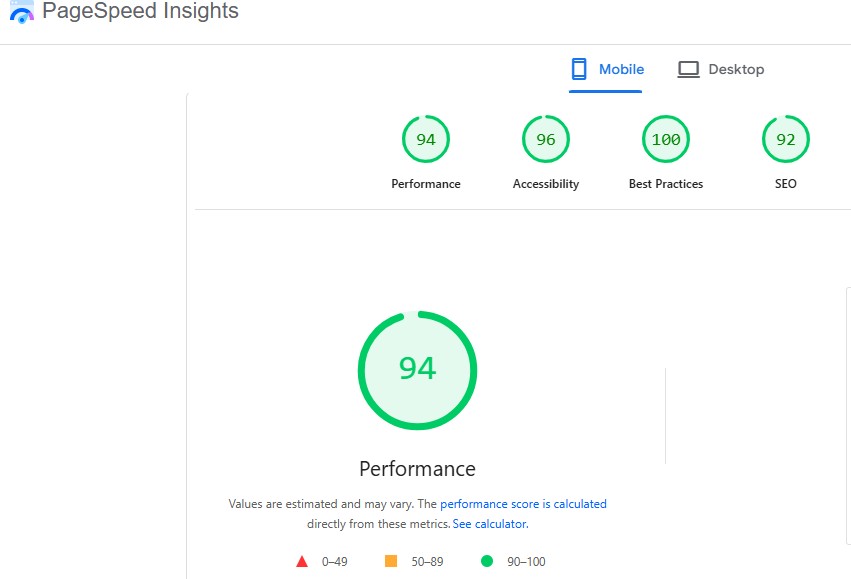
Core Web Vitals get diagnosed properly — not just a Lighthouse score, but field data, because lab data and real-world user experience data don’t always agree, and Google’s using the real-world numbers. Schema gets validated against the actual structured data testing tools, not just checked for presence. And at the end of it, you get a prioritized backlog, ranked by ranking impact against effort, not just a wall of 300 flagged issues with no sense of what to fix first.
Core Web Vitals Optimization
This deserves its own section because it’s one of the areas where the gap between “technically compliant” and “actually optimized” is enormous. LCP, INP, and CLS are confirmed ranking signals at this point — not a maybe, not a “some SEOs think” situation. They’re also a genuine conversion lever independent of rankings, because slow sites lose users regardless of where they rank.
The work here breaks down into a few real buckets: image optimization (still, after all these years, one of the biggest LCP offenders on most sites), render-blocking resource cleanup, and third-party script auditing — because half the time, the thing tanking a site’s performance isn’t anything the client built, it’s a chat widget or an ad pixel or an analytics script somebody added two years ago and forgot about.
We also set up field data monitoring so you’re not just fixing this once and hoping it holds — you’re actually tracking whether real users are experiencing the improvement, not just whether a lab test says you should be.
Crawlability & Indexation
This is the unglamorous plumbing work, and it’s exactly where a lot of ranking potential quietly leaks out. Robots.txt misconfigurations that accidentally block entire sections. XML sitemaps that haven’t been updated since a redesign eighteen months ago and are still pointing to dead URLs.
Canonical tags pointing to the wrong version of a page, or worse, pointing in circles. Hreflang setups for multi-region sites that are subtly wrong in a way that confuses Google about which version to show in which market.
Then there’s the crawl budget itself — for larger sites especially, Google isn’t going to crawl everything infinitely. If your crawl budget is getting eaten by faceted navigation generating thousands of near-duplicate filtered URLs, that crawl budget is not being spent on the pages you actually want ranking. Fixing this isn’t glamorous work, but it’s often where the fastest wins live, because you’re not creating anything new — you’re just letting Google finally see and properly index what’s already there.
Schema Markup That Actually Gets Validated
Schema is one of those things everyone knows they’re supposed to have, and a lot of sites have some version of it implemented badly enough that it’s not actually doing anything. We implement and validate Local Business, Service, Product, FAQ, Article, Review, and BreadcrumbList schema depending on what’s relevant to the site — and “validate” here means actually checking it against Google’s structured data testing tools, not just eyeballing the JSON-LD and assuming it’s fine.
Done right, this is what unlocks rich results in the SERP — star ratings, FAQ dropdowns, price display, all the stuff that makes a listing take up more visual real estate and pull a higher click-through rate even without a ranking change.
It’s also increasingly what determines whether AI search engines and answer engines reliably cite your content at all. If your structured data is a mess, you’re not just missing rich results in classic Google search — you’re less likely to get pulled into an AI Overview or a ChatGPT-style citation, because those systems lean heavily on clean, well-structured data to understand what a page is actually saying.
Site Architecture
URL structure, internal linking hierarchy, breadcrumb implementation, pagination strategy — this is the part of technical SEO that’s as much about user experience as it is about crawlers, honestly, and the best implementations serve both at once. A clean, logical URL structure isn’t just easier for Google to understand; it’s easier for a human glancing at a link to understand what they’re about to click into.
Internal linking specifically gets underrated constantly. It’s not just about navigation — it’s how you tell Google which pages matter most on your site, and how you pass authority from your strongest pages to the ones that need a boost. A site with genuinely great content but a flat, disorganized internal linking structure is leaving ranking potential on the table in a way that’s completely invisible unless you’re specifically looking for it.
Migration & Redesign Support
This one’s worth calling out separately because it’s where technical SEO mistakes get the most expensive, the fastest. A site migration or redesign done without technical SEO oversight is one of the single most common ways businesses tank years of earned rankings in a matter of days — broken redirects, lost URL equity, unintentionally deindexed sections, the works.
Our approach here is pre- and post-launch, not just a post-mortem after something’s already gone wrong. Pre-launch means mapping the full redirect strategy before the new site goes live, auditing what’s actually indexed currently so nothing important gets silently dropped, and stress-testing the new architecture against the old one.
Post-launch means actually monitoring the aftermath — because even a well-planned migration can throw up surprises once Google starts recrawling, and catching those early is the difference between a two-week dip and a six-month recovery project.
Why Technical SEO Is Genuinely Critical (Not Just a Nice-to-Have)
Getting indexed properly.
If Google can’t crawl or render your pages, none of the rest of your SEO investment matters — content, links, on-page optimization, all of it is wasted if the underlying page isn’t even in the index. T
Competing on speed.
Core Web Vitals are confirmed ranking signals, and even setting rankings aside entirely, they’re a major conversion lever on their own. All else equal, a faster site beats a slower one — both in the SERP and in actual user behavior once someone lands.
Earning rich results.
Schema markup is the mechanism that unlocks star ratings, FAQ dropdowns, price snippets, and the other rich SERP features that pull disproportionate click-through — and it’s increasingly the same mechanism that determines whether AI-driven search surfaces cite you reliably.
The Actual Impact of Fixing the Technical Foundation
Technical work tends to produce the fastest ranking lifts of anything in the SEO toolkit, and there’s a simple reason why: it’s not creating new value from scratch, it’s unlocking value that’s already been earned but is currently trapped behind a technical blocker.
Faster indexation.
New pages get crawled, rendered, and indexed faster once the crawlability layer is clean — meaning fresh content shows up in the SERP in days rather than weeks.
Higher rankings without touching content.
Removing technical drag — slow load times, render failures, broken schema — lifts existing rankings without a single word of copy changing.
Better crawl efficiency.
Google spends its limited crawl budget on the pages that actually matter to your business, instead of burning it on infinite filtered URL combinations, broken redirect chains, or duplicate content nobody asked it to index.
Rich SERP features.
Properly implemented schema increases click-through rate even in cases where your ranking position doesn’t move at all — which is a genuinely rare thing in SEO, a lever that improves results independent of the ranking itself.
Who Actually Needs a Technical SEO Audit
Honestly — most sites past a certain age or size benefit from one, but a few signals make it more urgent than a routine check-in. If you’ve been publishing consistently and your rankings have plateaued despite that, technical drag is a common, overlooked culprit.
If you’re planning a migration or redesign, an audit beforehand isn’t optional, it’s risk management. If your Core Web Vitals scores in Search Console are flagged red or yellow across a meaningful share of pages, that’s a direct signal something’s costing you both rankings and conversions right now.
And if you’ve never actually validated your schema against Google’s own testing tools — not eyeballed it, actually validated it — there’s a good chance it’s not doing what you think it’s doing.
Technical SEO Doesn’t Work in Isolation
Worth being honest about this: technical SEO is the foundation, not the whole building. It removes the drag holding back content and links that already exist or are already earned — it doesn’t manufacture rankings out of nothing on its own.
Pair it with real content strategy and a legitimate link profile, and the technical work is what lets those efforts compound properly instead of underperforming against a broken foundation. That’s really the honest pitch here — not that technical SEO alone wins rankings, but that skipping it quietly caps everything else you’re already investing in.
Where to Start
If you’re not sure whether your site’s technical foundation is the thing holding you back, that’s exactly what a full audit is for — a genuine, prioritized answer instead of a guess. From there, whether you want us to implement the fixes directly or hand your dev team a clean, developer-ready spec is entirely up to how your team’s set up.
Either way, the goal’s the same: get the blockers out of the way so the rankings you’ve already earned through content and links actually show up where they belong.